You walk across your lawn and notice a raised dirt ridge. A few feet away, the grass looks flattened, and one of your young shrubs has bite marks near the base.
Well, what happened?
You may have moles, voles, or possibly another burrowing pest. Although moles and voles are often confused, they are very different animals. They also damage lawns in different ways.
So, correct identification is important. A treatment that works for a mole problem may do little to stop voles. Before choosing a control method, you need to know what is moving through your property. In this blog, we will help you spot the difference, understand the damage, and know when to schedule professional vole or mole control.
| Stop Lawn Damage Now – Schedule Your Inspection! |
What Is the Difference Between Moles and Voles?
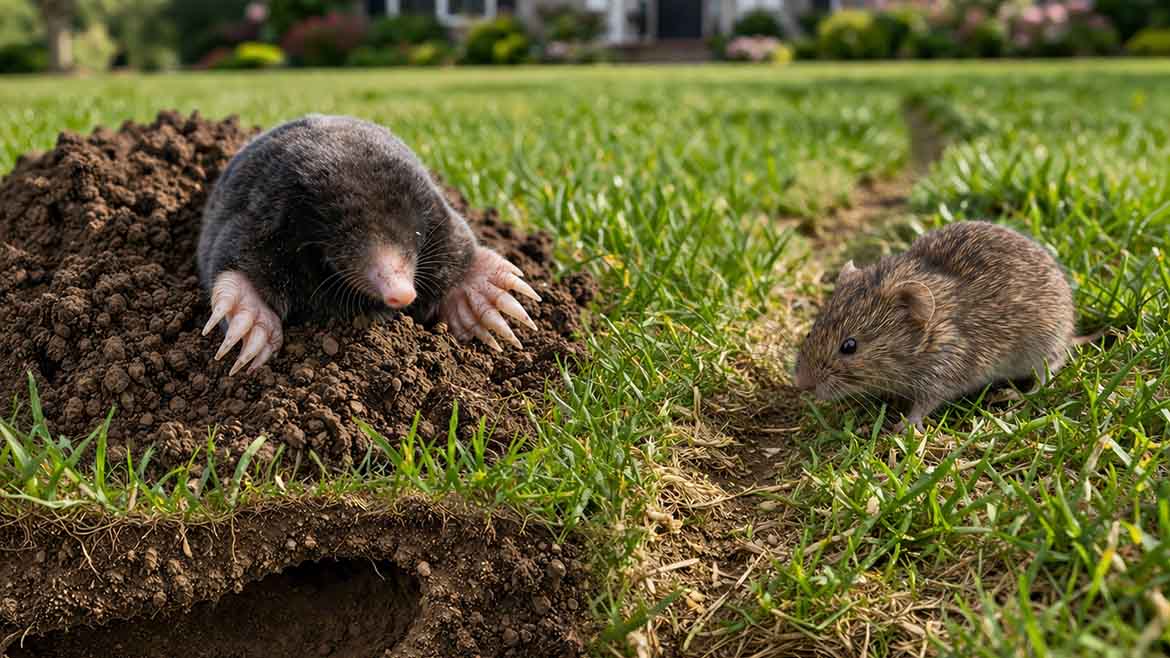
Moles spend most of their time underground. They have pointed noses, tiny eyes, wide front feet, and strong claws made for digging.
They are not rodents. Moles mainly eat earthworms, insects, and other small creatures in the soil. They usually do not eat your grass or plants. But their tunnels can push roots out of place, dry out the soil, and leave ugly ridges across a lawn.
Voles are small rodents. People sometimes call them meadow mice or field mice. They have compact bodies, short tails, small ears, and rounded faces. But unlike moles, voles eat plants. They may chew –
- Grass
- Roots
- Seeds
- Bulbs
- Groundcover
- Shrubs
- Young tree bark
Moles cause damage when they dig. Voles cause damage when they are feeding. And that difference can give you the first big clue.
What Are The Signs You Have Moles?
Have you noticed raised lines running across your lawn? They might feel soft when you step on them. Those ridges are often mole tunnels. Other common signs of moles include –
- Round or volcano-shaped piles of soil
- Loose or uneven patches of grass
- Brown grass along the tunnels
- Plants with loose or disturbed roots
- Fresh damage that appears overnight
Mole mounds are usually round. This helps separate them from pocket gopher mounds, which are often shaped more like a crescent or fan. Moles prefer moist soil with a lot of worms and insects. That means irrigated lawns, landscaped commercial properties, parks, and areas near waterways can provide favorable conditions for them.
One mole can create a surprising amount of visible damage. You might see several tunnels and assume you have a large infestation when only one or two animals are active.
| Protect Your Lawn Today – Call (916) 741-2847 |
What Are The Signs You Have Voles?
Vole damage usually looks different. Instead of raised tunnels, you might see narrow trails running along the top of the ground. These paths often wind through grass, weeds, mulch, and thick groundcover. You need to look for –
- Narrow surface runways in the grass
- Small burrow openings
- Grass clipped close to the ground
- Missing bulbs or damaged roots
- Yellow, weak, or wilting plants
- Gnaw marks near the base of trees
- Damaged shrubs and young landscaping
- Droppings along active pathways
Vole openings may be around 1½ inches wide and appear close to their surface runways. They often stay hidden in tall grass, dense weeds, mulch, or other low-growing cover. Voles can also reproduce quickly. A small population may become much harder to manage when it has food, shelter, and very little disturbance. So, early vole control can help prevent landscape damage.
A Quick Way to Compare the Damage
Still not sure what you are seeing? You can use this simple comparison.
You may have moles when –
- The soil itself is pushed upward.
- You see raised ridges.
- Mounds are round or volcano-shaped.
- Plant roots are loosened but not heavily chewed.
- Most activity appears underground.
You may have voles when –
- Grass is pressed down or clipped.
- Trails run across the soil surface.
- Small entrance holes appear near the trails.
- Roots, bark, or bulbs have been eaten.
- Most damage happens around dense vegetation.
You may even have both. Voles can use abandoned or active mole tunnels as protected travel routes. That can make it difficult to tell what is causing the lawn damage, which is one reason a professional pest inspection can help.
Could It Be a Gopher Instead?
Greater Sacramento properties may also experience pocket gopher activity. Gophers are often confused with moles because both animals create underground tunnels and dirt mounds. But gophers usually eat roots and plants. Their mounds are commonly crescent-shaped, with the plugged tunnel entrance located toward one side.
You should not assume every mound belongs to a mole. Using the wrong control method wastes time and may allow the real pest to keep damaging the landscape. A professional service for pest inspection can help you identify the animal by examining mound shape, tunnel placement, feeding damage, burrow size, and active travel routes.
Why Are Moles or Voles Attracted to Your Property?
These pests are not choosing your property because the grass looks especially nice. They are responding to food, moisture, cover, and shelter. Conditions that may support activity include –
- Soil that stays wet from frequent watering
- Thick groundcover
- Tall or overgrown weeds
- Heavy layers of mulch
- Piles of leaves and yard debris
- Thick vegetation around buildings
- Quiet, undisturbed areas along the edge of the yard
- Plenty of insects and earthworms
- Open spaces under fences or near undeveloped land
A well-maintained landscape can still experience mole or vole activity. But overgrown areas give voles more places to hide, while consistently moist soil may make digging easier for moles.
How Can You Reduce Mole Damage?
Mole control starts with finding the active tunnels. Not every visible ridge is still being used. Some are temporary feeding tunnels. Others are deeper travel routes that moles may visit repeatedly.
Products that claim to drive moles away can provide inconsistent results. You may briefly move the activity from one side of the lawn to another without solving the problem. That’s why you should always rely on professional pest control services.
Professional moles and voles control services often involves –
- Checking the tunnels for signs of activity
- Finding the tunnels moles are actively using
- Choosing the right places to set traps
- Watching for new tunnels or mounds
- Flattening old tunnels to spot fresh activity
- Addressing conditions that may attract moles
How Can You Reduce Vole Damage?
Vole management focuses heavily on removing shelter and protecting vulnerable plants. Helpful steps include –
- Mowing regularly
- Cutting back tall weeds
- Removing thick plant debris
- Avoiding too much mulch
- Removing thick growth around tree trunks
- Using tree trunk guards to protect your young trees
- Sealing gaps around the edges of landscaped areas
- Checking surface trails for signs of activity
You should keep mulch several inches away from tree trunks. Thick mulch pressed against bark can give voles a hidden place to feed. You should also trim back heavy ground cover around important plants, utility areas, walkways, and building edges. The less protection voles have, the more difficult it becomes for them to move unnoticed.
Habitat changes and exclusion are important parts of long-term vole management. Once populations become large, vole control services can become more difficult and expensive.
Why DIY Control Often Misses the Main Problem
The biggest DIY mistake happens before treatment starts – the pest is identified incorrectly. You may treat for moles when voles are chewing the roots. You may blame voles when a gopher is building the mounds. You may even fix the visible lawn damage without addressing the active burrow system underneath it.
Other common problems include –
- Setting traps in abandoned tunnels
- Using products without finding active areas
- Ignoring nearby weeds and groundcover
- Treating only visible damage
- Failing to inspect the full property
- Overlooking repeated activity near property lines
You need more than a quick look at one dirt pile. Effective moles and voles control starts with a complete inspection and a plan based on the actual animal.
| Keep Moles and Voles Away – Call (916) 741-2847 |
When Should You Call a Pest Control Professional?
A single old tunnel might not need immediate service, but repeated or spreading damage should be addressed. Schedule professional pest control when –
- You notice new tunnels every day.
- More mounds keep appearing across your lawn.
- Trees or shrubs have visible chew marks.
- Plants start dying for no clear reason.
- The ground feels soft or uneven when you walk on it.
- The damage spreads to areas you use often.
- Previous DIY methods have failed.
- You cannot tell whether you have moles, voles, or gophers.
This is especially important for commercial and industrial properties. Damaged turf can affect curb appeal, interfere with landscape maintenance, and create uneven walking areas for employees, tenants, vendors, and visitors.
Questions You May Have About Moles and Voles
1. Are moles harmful to people?
Moles rarely interact with people because they spend most of their lives underground. Their main concern is property damage. Active tunnels can disturb turf, loosen plant roots, and leave an uneven surface. You should still avoid handling any wild animal directly and call for professional mole control Sacramento services when necessary.
2. Do moles eat grass roots?
Moles mainly eat worms and insects rather than grass roots. Their digging can still damage a lawn by separating roots from the soil or causing the grass above a tunnel to dry out. Voles and gophers are more likely to cause direct chewing damage.
3. Will killing lawn grubs get rid of moles?
Not necessarily. Moles eat several types of soil organisms, including earthworms. Removing one food source may not make them leave. Treating a lawn for insects without confirming an insect problem can also create unnecessary costs.
So, you should always hire a pest control professional who can identify what is attracting the moles and recommend the right way to control them.
4. Can moles and voles damage the same property?
Yes. They can occupy the same general area, and voles may travel through mole tunnels. When you see both raised ridges and chewed vegetation, more than one pest may be present. In that case, you should call for professional moles and voles control Sacramento services to protect your property.
| Pest Control Service Areas! | ||
| Pest Control Natomas, CA | Pest Control Rocklin, CA | Pest Control Roseville, CA |
| Pest Control Elk Grove, CA | Pest Control Folsom, CA | Pest Control Loomis,CA |
Takeaway
Moles and voles can both damage a lawn. But they don’t behave the same way. Moles tunnel underground and leave raised ridges or rounded mounds. Voles travel near the surface and chew grass, roots, bulbs, bark, and other plant material.
Before you try to stop the damage, identify the pest. You need to look at the shape of the mound, the location of the trail, and whether your plants have been eaten. A professional pest inspection can help you understand what is active, where the problem starts, and what steps can prevent landscape damage.
Read More About:
Stop Lawn Damage Before It Spreads – Rely on Finley Pest Control
Your lawn is part of the place you call home. You should be able to enjoy it without worrying about new tunnels, dying plants, or chewed landscaping. Finley Pest Control is here to solve your mole and vole problems. We offer professional moles and voles control in Sacramento.
With over 10 years of experience, our locally owned, trusted, and BBB-accredited company provides fast, reliable service and customized treatment plans for pest control in Sacramento. Our pros can identify the source of the damage and take the necessary steps to treat moles and voles.
We also provide ant, rodent, cockroach, bed bug, spider, flea, mosquito, and bird control services. Schedule your free inspection today by calling Finley Pest Control at (916) 741-2847.