You walk into your kitchen one morning, flip on the light, and freeze. A cockroach scurries across the counter and disappears behind the fridge. Or maybe you’ve noticed tiny silvery bugs darting across your bathroom floor at night. If this sounds familiar, there is a good chance moisture is to blame.
Most pests need water to survive, just like we do. When your home has excess moisture, you are basically rolling out the welcome mat for every bug and rodent in the neighborhood.
In this blog, we will tell you how moisture attracts pests, what to look for, how you can get rid of them, and most importantly, how you can prevent the problem. By the end, you’ll know how to spot moisture issues before it’s time to call in professional pest control or your local area.
| Get Expert Pest Control – Call (916)-741-2847 Now! |
Does Moisture Attract Pests?
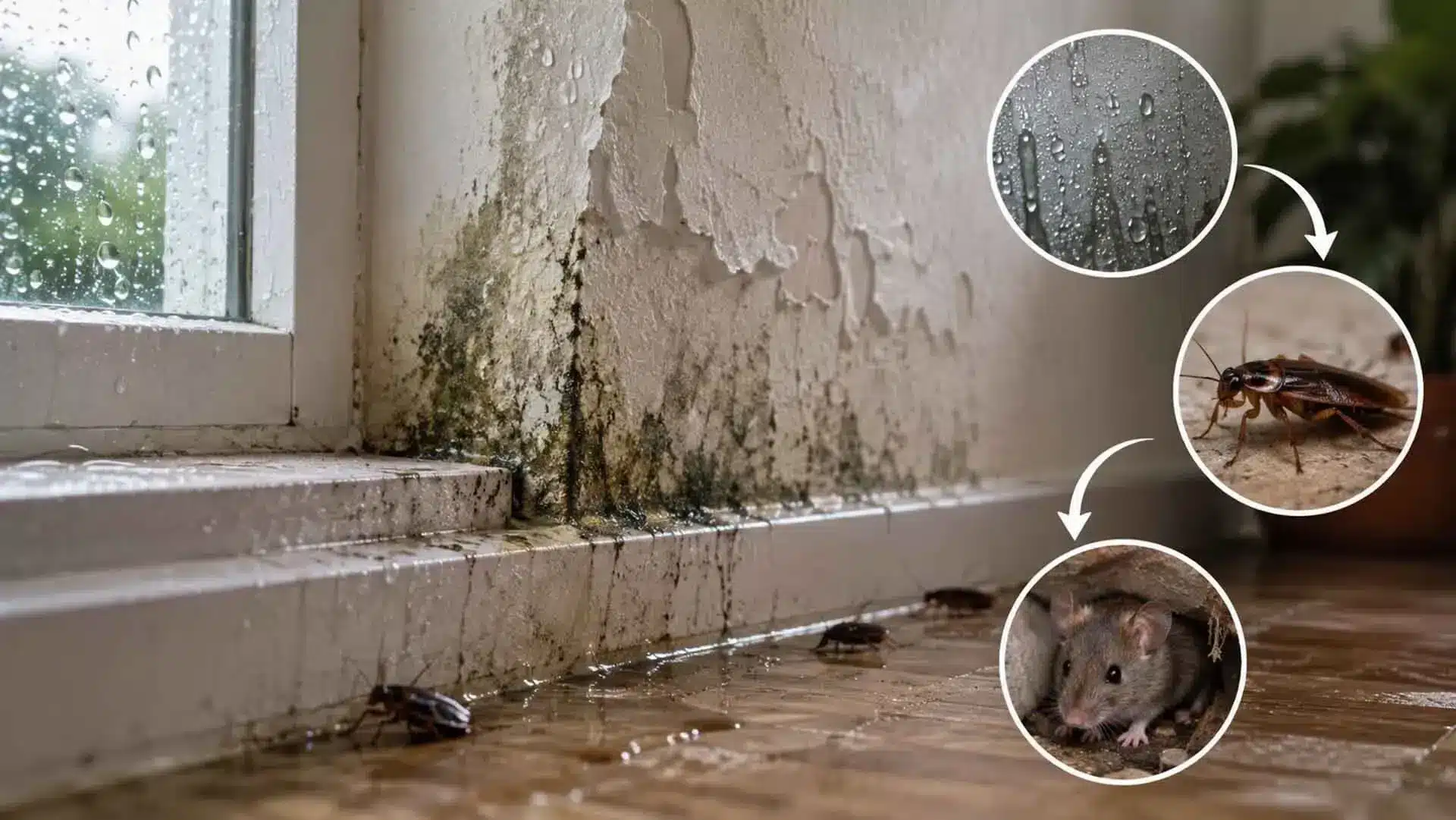
Yes, absolutely. In fact, pests require food, water, and shelter to survive, just like us, and moisture offers one of those three essential needs directly. However, it doesn’t stop here.
When moisture accumulates, it creates a cascade of conditions that pests love –
- Standing water: It offers mosquitoes a place to breed and provides drinking water for cockroaches, ants, and rodents.
- Damp wood: It softens and becomes easier for termites and carpenter ants to chew through.
- High humidity: This allows mold and fungi to grow, which become a food source for pests like silverfish, booklice, and springtails.
- Condensation: Condensation on pipes, windows, and walls creates damp micro-environments where pests can thrive unnoticed.
The Common Sources of Moisture Around Your Home
Moisture can find its way into your home through more avenues than you might realize. Here are the most common culprits –
- Leaky Pipes and Plumbing
- Condensation on Windows and Pipes
- Poor Ventilation in Bathrooms and Kitchens
- Crawl Spaces and Basements
- Overwatered Landscaping and Poor Drainage
- Attic Leaks and Poor Insulation
- Clogged Gutters and Downspouts
Common Household Pests That Thrive in Damp Areas
| Moisture Source or Condition | Pests Commonly Attracted | Why They’re Attracted | Potential Risk to Your Home |
| Leaky Pipes or Plumbing | Cockroaches, Rodents, Ants | A reliable water source and shelter | Food contamination, property damage, bacterial infection |
| Damp Wood | Carpenter Ants, Termites | Soft, moisture-damaged wood is easier to tunnel through | Structural damage and expensive repairs |
| Standing Water | Mosquitoes | Perfect breeding environment for mosquito larvae | Increased mosquito population and potential disease risks as well. |
| High Indoor Humidity | Booklice, Silverfish, Springtails | Allows mold growth and offers favorable living conditions | Damage to clothing, books, paper, and other belongings |
| Wet Crawl Spaces | Termites, Rodents, Cockroaches | Dark, humid environments offer shelter and easy access | Insulation damage, nesting, and wood deterioration |
| Roof Leaks & Wet Attics | Carpenter Ants, Rodents, Cockroaches | Moist insulation and hidden spaces make perfect nesting sites | Insulation damage, electrical hazards, recurring infestations |
| Clogged Gutters & Poor Drainage | Mosquitoes, Ants, Termites | Water pools around the foundation and entry points | Increased risk of foundation moisture and pest entry |
| Bathroom Condensation | Silverfish, Drain Flies, Cockroaches | Warm, damp conditions support moisture-loving pests | Persistent infestations and mold-related problems |
| Overwatered Landscaping | Earwigs, Ants, Cockroaches, Rodents | Excess moisture around the exterior of the home attracts pests indoors | Easier pest access to your home and foundation |
| Mold and Mildew Growth | Booklice, Silverfish, Springtails | Mold is a food source for several insects | Ongoing pest activity and indoor air quality concerns |
How to Get Rid of Moisture in Your Home?
Here are some steps you can take –
1. Fixing Leaks Right Away
A slow drip is enough for pests to survive. So, you should check under every sink, around every toilet, and behind your refrigerator and washing machine for leaks or signs of excess moisture.
2. Using Dehumidifiers
Using a dehumidifier in basements, crawl spaces, and other damp areas can help keep moisture under control. So, you should try to keep indoor humidity below 50%. This is extremely important in humid seasons.
3. Better Ventilation
You should open the windows when needed and make sure to use exhaust fans in the kitchen and bathroom to ensure good air circulation.
4. Cleaning and Maintaining Gutters
Make sure to keep gutters and downspouts clean and well maintained so that water flows away from your home.
5. Sealing of Cracks and Gaps
You need to use caulk around your windows and doors, and stuff steel wool into gaps around plumbing pipes. These steps help keep moisture out and prevent pests from entering.
6. Encapsulating the Crawl Space
If you have a crawl space, you need to consider encapsulation or sealing it with a vapor barrier. This greatly reduces moisture and deters pests.
7. Fix Grading and Drainage Problems
Make sure the ground slopes away from the foundation of your home. This can prevent water from pooling against your walls.
8. Reduce Indoor Humidity
You can use air conditioning and fans to keep air moving and help reduce indoor moisture.
9. Regular Trimming of Vegetation
You should keep bushes, trees, and shrubs trimmed back from your house, as this minimizes trapped moisture and removes easy pathways for pests to enter.
10. Avoid Overwatering Your Landscaping
Water your lawn and plants only as needed and avoid sprinklers hitting the exterior walls of your home.
If you’ve tried these steps and still have pests, it’s time to call a professional. A professional pest inspection can help you find hidden moisture issues on your property.
| Get Reliable Pest Control Solutions – Contact Our Team Today! |
Common Questions From Our Clients
1. Will a pest inspection find moisture problems?
A pest inspection can often reveal several signs of hidden moisture that may be attracting pests. During a pest inspection, technicians look for issues like leaking pipes, damp crawl spaces, water-damaged wood, mold growth, condensation, and areas with high humidity. A pest inspection isn’t the same as a plumbing or mold inspection. But it can help identify moisture-related conditions that are contributing to an infestation.
2. How much does it cost to fix a moisture-related pest problem?
The cost depends on both the pest infestation and the source of the moisture. Fixing a small plumbing leak may cost much less than repairing termite damage or replacing moisture-damaged wood. If the moisture issue isn’t addressed, pests can return, causing higher repair and treatment costs over time. A professional pest inspection can explain the underlying cause and recommend the most cost-effective solution.
3. Can fixing a moisture problem get rid of pests permanently?
Fixing the moisture source removes one of the main reasons pests stay in your home, but it may not eliminate an existing infestation on its own. Pests such as termites, cockroaches, ants, and rodents may still require professional treatment. Combining moisture control with pest control provides the best long-term results.
4. Does homeowners insurance cover pest damage caused by moisture?
No, not in most cases. Homeowners insurance does not cover pest damage or moisture problems caused by a lack of maintenance, such as long-term leaks. But other factors like sudden water damage from a burst pipe may be covered depending on your policy. It’s always best to check with your insurance provider to understand your specific coverage.
5. How often should I schedule a pest inspection if my home has moisture issues?
If your home has experienced leaks, flooding, or ongoing humidity problems, an annual pest inspection is recommended. Homes with crawl spaces, older plumbing, or a history of termite or rodent activity can benefit from more regular inspections to catch problems early.
| Pest Control Service Areas! | ||
| Pest Control Sacramento, CA | Pest Control Rocklin, CA | Pest Control Lincoln, CA |
| Pest Control Elk Grove, CA | Pest Control Folsom, CA | Pest Control Loomis, CA |
Takeaway
Moisture problems don’t fix themselves. And neither do pest infestations. The longer you wait, the more damage pests can cause, and the more expensive it can become to fix.
So, when you notice signs of moisture or pests in your home, you should not put off addressing the problem. Whether you need a pest inspection, help with an existing infestation, or just want to know if your home is at risk, get the right professional help from a reputable service provider.
Read More About:
Take Action Before Moisture Becomes a Bigger Problem With Finley Pest Control
Established in 2014, Finley Pest Control has become one of the most sought-after pest control providers in the Greater Sacramento region. Our affordable pest control Roseville services are available for both residential and commercial properties.
We use extermination methods that adhere to Integrated Pest Management (IPM) principles. Our professionals will explain everything properly, show you what we find, and give you straightforward solutions that fit your budget. Our BBB-accredited and licensed company (license PR9567) also provides ant, rodent, cockroach, bed bug, spider, flea, mosquito, and bird control services.
Don’t allow moisture to invite pests into your home. Call us today at (916)-741-2847 to schedule a pest inspection in Roseville.