You step out onto your patio for a relaxing evening, only to find yourself immediately swarmed by buzzing, biting pests. Within seconds, you are forced to head back indoors, slapping your arms and legs in frustration. It feels like your backyard has suddenly been transformed into a personal breeding zone for blood-sucking insects. If this is becoming a part of your daily routine, you must be wondering, “My home is clean, so why is this still happening?
The hidden answer almost always comes down to stagnant water pooling somewhere on your lawn. Many homeowners do not realize that tiny, unmanaged puddles can quietly invite hundreds of annoying pests and insects to their doorstep. In this blog, we will break down how quiet, still water feeds the life cycle of these pests.
We will also look at how you can spot hidden problem areas and how a professional mosquito control service can help you get your outdoor space back.
| Protect Your Yard from Mosquitoes – Contact Us Now! |
Why Does Standing Water Draw Mosquitoes to Your Yard?
To understand why mosquitoes become such a problem, it’s important to know what actually drives them. Like many insects, mosquitoes are mainly focused on two things: surviving and reproducing.
Adult mosquitoes usually feed on plant nectar for energy. However, female mosquitoes need a blood meal before they can produce eggs. Once they get that blood meal, they start looking for a suitable place to lay their eggs, and standing water is exactly what they need.
Mosquitoes Start Life in Water
Standing water is essential to the mosquito life cycle because the early stages of development happen in water. Eggs hatch into larvae, larvae develop into pupae, and eventually become adult mosquitoes.
Female mosquitoes prefer quiet, undisturbed water because it gives their eggs and young larvae a better chance of surviving. Fast-moving water can wash them away before they have time to develop.
Even Small Amounts of Water Can Become Breeding Sites
Many people think mosquitoes only breed in ponds or large puddles. That’s not true.
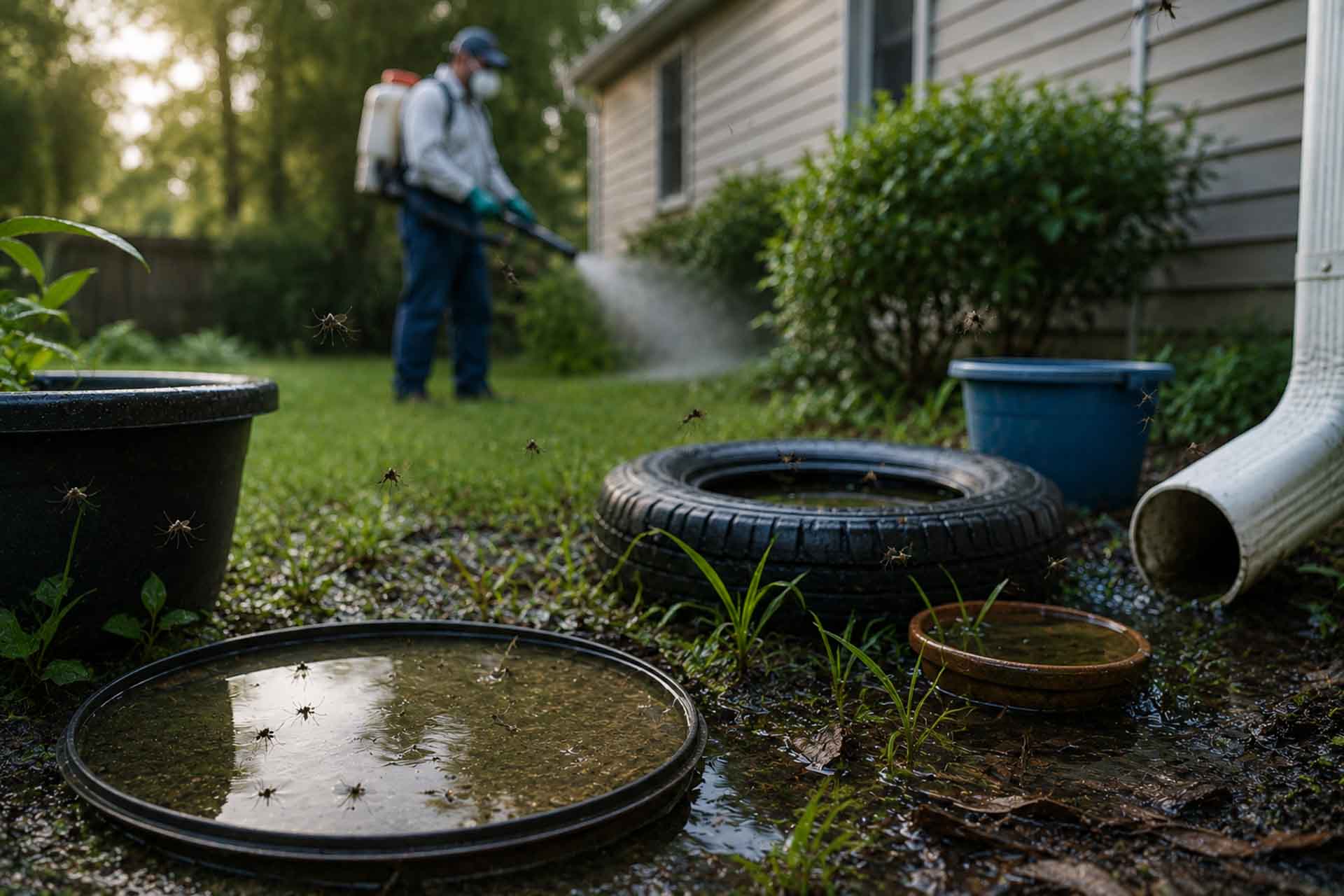
A flowerpot saucer, birdbath, clogged gutter, bucket, or even a bottle cap holding rainwater can provide enough water for mosquitoes to lay eggs. Over time, these small water sources can support growing mosquito populations around your property.
That’s why getting rid of standing water is one of the most effective ways to reduce mosquito activity around your home.
Where Is Standing Water Hiding Around Your Property?
Many mosquito breeding sites are hidden in places homeowners rarely check. Take a walk around your property after a rainstorm or watering cycle and look for clogged gutters, birdbaths, plant saucers, children’s toys, pool covers, buckets and wheelbarrows, drainage areas, and pet water bowls. Even small amounts of water can support mosquito development.
Common Sources of Standing Water Around Your Home
| Standing Water Source | Mosquito Risk | What to Do |
| Birdbath | High | Change water every few days |
| Plant Saucer | High | Empty weekly |
| Clogged Gutter | High | Remove debris regularly |
| Pool Cover | High | Drain after rain |
| Fountain | Low | Keep water moving |
Why Are Mosquitoes Worse During Summers in the Greater Sacramento Area?
If you live in Greater Sacramento or areas with extreme climates, you must have noticed that mosquitoes seem much worse in the middle of summer.
Greater Sacramento’s warm temperatures create ideal conditions for mosquito activity. During spring, it may take several weeks for mosquito eggs to develop into adults. But when temperatures reach the 80s and 90s, that process can happen in as little as 7 to 10 days.
Summer irrigation can make the problem even worse. While natural areas dry out, lawns, gardens, pet water bowls, and sprinklers continue providing the moisture mosquitoes need to survive and reproduce.
This is why mosquito activity often increases dramatically during Sacramento’s hottest months.
What Other Insects Are Attracted to Moisture?
Standing water doesn’t just create mosquito problems. Excess moisture often attracts other pests as well. This is one reason many homeowners searching for pest control service discover that mosquitoes aren’t their only issue.
| Common Insects | Why They’re Attracted to Moisture | Where You Might Find Them |
| Mosquitoes | Need standing water to lay eggs and complete their life cycle | Birdbaths, gutters, buckets, plant saucers |
| Ants | Many ant species prefer damp soil and moisture-rich areas | Around foundations, landscaping, and irrigation zones |
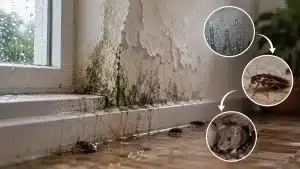
| Cockroaches | Need water to survive and thrive in humid environments | Damp crawl spaces, kitchens, garages, and outdoor storage areas |
| Earwigs | Prefer cool, moist hiding spots during the day | Mulch beds, under rocks, near sprinklers, and garden areas |
| Silverfish | Thrive in humid conditions and areas with excess moisture | Bathrooms, laundry rooms, garages, and basements |
| Spiders | Follow other insects that gather around moisture sources | Landscaping, sheds, garages, and outdoor lighting |
If you’re noticing mosquitoes around your property, there may be a larger moisture issue attracting other pests as well. Addressing moisture problems can often help reduce multiple insect populations at the same time.
What Happens If Standing Water Is Left Untreated?
Most people think mosquitoes are simply annoying. The reality is that standing water can affect your health, comfort, and the safety of your household. Untreated standing water can lead to:
- More mosquitoes around your property.
- Frequent mosquito bites during outdoor activities.
- Less time spent enjoying patios, decks, and backyards.
- Increased insect activity around landscaping.
- Concerns for family members and pets.
Why Mosquitoes Are More Than Just a Nuisance
Mosquitoes are also known to carry and spread certain diseases. While the risk varies by location, public health officials continue to monitor mosquito-borne illnesses such as West Nile virus. This is one reason reducing mosquito breeding sites is so important.
Pets can also be affected. Mosquitoes can transmit heartworms to dogs and cats through their bites. Over time, heartworms can cause serious health problems if left untreated.
The longer standing water remains on your property, the more opportunities mosquitoes have to breed and spread. Taking steps to eliminate standing water is one of the simplest ways to help protect your family, pets, and outdoor living spaces.
How Can You Reduce Mosquito Breeding Around Your Home?
The best way to reduce mosquitoes is to remove the places where they breed. A few simple habits can make a big difference.
1. Empty Standing Water Every Week
Take a quick walk around your property once a week and empty anything that can hold water. Check buckets, children’s toys, pet bowls, plant saucers, and trash can lids. Since mosquitoes can develop quickly, removing water regularly helps stop them before they become biting adults.
2. Clean Gutters and Downspouts
Leaves and debris can trap water in gutters, creating an ideal breeding spot for mosquitoes. Therefore, clean your gutters regularly and make sure downspouts direct water away from your home.
3. Keep Water Features Moving
Moving water is less attractive to mosquitoes than still water. So, adding a small pump or changing the water frequently can help prevent mosquitoes from laying eggs.
4. Fix Drainage Problems
Look for the areas where water collects after rain or watering. Improving drainage can help eliminate hidden breeding sites and reduce mosquito activity around your property.
Note: If mosquito activity continues despite these efforts, professional mosquito control services can help identify hidden breeding sites and reduce adult mosquito populations.
| Get Expert Pest Control Solutions – Book Your Free Consultation Today! |
Frequently Asked Questions About Mosquitoes and Standing Water
1. How long does standing water need to sit before it attracts breeding insects?
Mosquitoes are very fast when it comes to finding a place to lay eggs. Female mosquitoes can begin laying eggs within a day or two after finding standing water. Because mosquito eggs can hatch quickly, even water that sits for a few days can become a breeding site. Keeping up with these quick life cycles on your own can be exhausting.
That’s why having a professional pest control technician inspect your property is the easiest way to find hidden puddles and break the breeding cycle before a major swarm takes over your yard.
2. Do mosquitoes lay eggs or hide out in tall grass and weeds?
Mosquitoes do not actually lay their eggs directly in dry grass or thick weeds because their young must have standing water to survive and grow. However, adult mosquitoes absolutely love tall grass and dense bushes for daily shelter. During the hottest parts of the day, they use overgrown foliage as a cool, shaded resting spot to keep from drying out. Keeping your lawn short removes these favorite hiding spots.
For the best results, a professional inspection can help you find where these insects are nesting, allowing for targeted treatments that keep adult populations away from your lawn borders.
3. Can My Neighbor’s Yard Cause a Mosquito Problem on My Property?
Yes. Mosquitoes can travel from nearby properties. Even if you remove standing water from your yard, nearby breeding sites can still contribute to mosquito activity. An experienced mosquito control professional can help identify likely sources and recommend the best treatment plan.
4. Why is mosquito control such a widespread issue for homeowners in the Greater Sacramento region?
The unique climate that creates a perfect storm for pests. The region deals with long, hot, and completely dry summers. While natural creeks dry up in the heat, residential yards stay highly active due to garden watering, filled drainage ditches, and automated lawn sprinklers. This creates an artificial paradise with plenty of warm water for pests during the hottest months.
Because local conditions are so specific, working with a local pest control expert who understands Greater Sacramento’s unique climate is highly effective. They can perform a thorough yard inspection to find exactly where the insects are multiplying and help you reclaim your outdoor space.
| Pest Control Service Areas! | ||
| Pest Control Natomas, CA | Pest Control Rocklin, CA | Pest Control Lincoln, CA |
| Pest Control Elk Grove, CA | Pest Control Folsom, CA | Pest Control Loomis,CA |
Takeaway
Standing water is one of the biggest reasons mosquito populations grow around homes. The good news is that many breeding sites can be eliminated through regular property maintenance and moisture management.
However, when mosquitoes continue to return despite your efforts, there may be hidden breeding areas nearby that require professional attention.
Read More About:
Protect Your Property From Mosquitos With the Help of Finley Pest Control in Sacramento
If you live in Sacramento or the nearby area and mosquitoes are making it difficult to enjoy your yard, Finley Pest Control can help. Our licensed team (OPR12115) provides reliable pest control in Sacramento and targeted mosquito control Sacramento, CA services. Our services are designed to reduce mosquito and other pest populations and help prevent future infestations.
Using proven treatment methods and Integrated Pest Management strategies, we help homeowners identify breeding sites, control active mosquito populations, and address the conditions that attract pests in the first place.
Whether you’re dealing with mosquitoes, ants, cockroaches, spiders, or other insects, Finley Pest Control has more than 10 years of experience and local knowledge to help protect your property year-round. We’re proud to be an A-rated, BBB-certified pest control company in the Greater Sacramento Area with a 5-star rating on Google.
Give us a call at 916-741-2847 to schedule an inspection and learn more about our mosquito and other pest control services.